2026-10-15 ·
Mold Risks Following Water Events Near Del Mar Lagoon
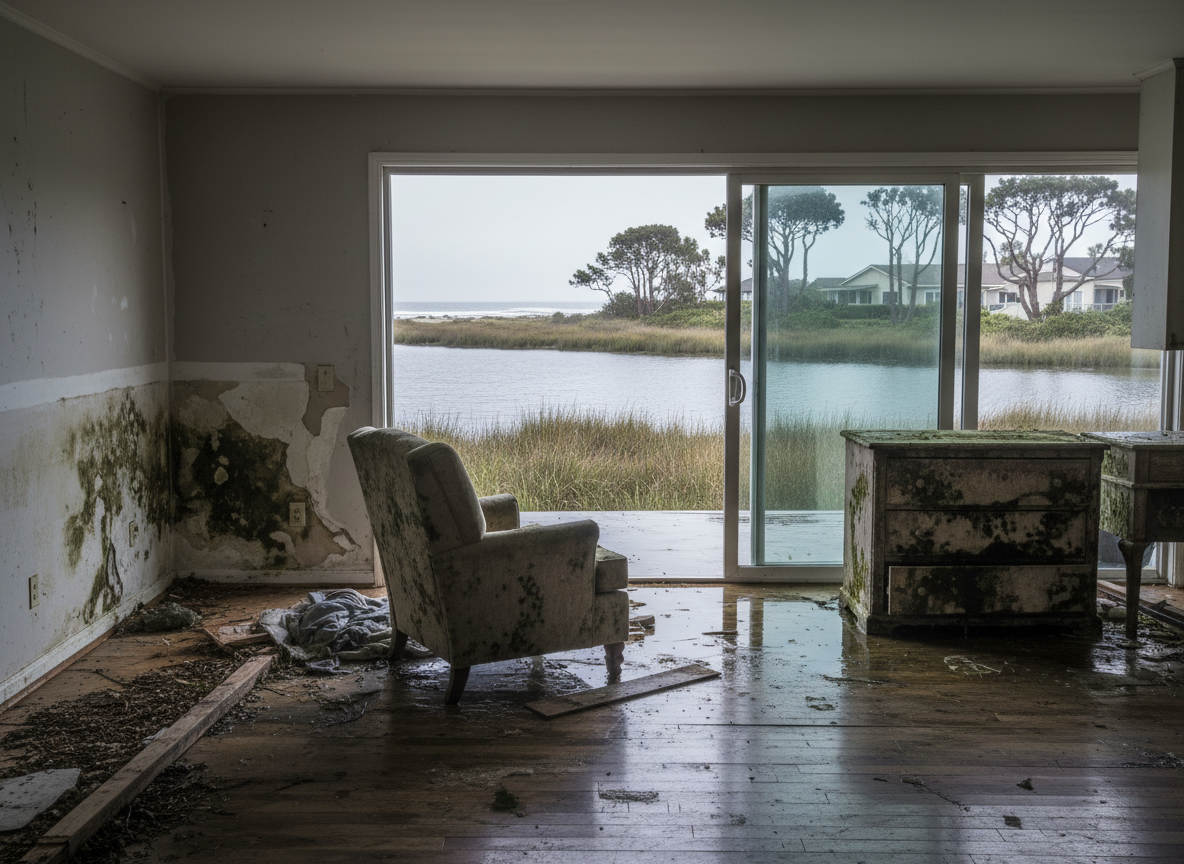
Mold can begin growing within 24 to 48 hours after water events near Del Mar Lagoon when moisture lingers in building materials. The mild coastal Mediterranean climate keeps relative humidity elevated year-round, allowing spores to colonize drywall, insulation, and wood framing faster than in drier inland zones of San Diego County. Properties in Del Mar Village and Del Mar Heights often feature older construction with crawl spaces and attics that trap water from lagoon-adjacent flooding or storm runoff, extending the window for hidden growth.
How Lagoon Proximity and Local Terrain Influence Moisture Retention
Del Mar's position next to the lagoon means properties in North Beach and along Powerhouse Park experience higher groundwater influence after heavy coastal rains. Water pools in low-lying lots and seeps into foundations more readily than in higher sections of Del Mar Heights. The Mediterranean climate prevents quick evaporation even in winter, so saturated soil around Del Mar Racetrack-adjacent homes stays damp for days. This terrain factor forces restoration crews to focus on subfloor drying and vapor barriers that inland San Diego projects rarely require. Homes built before 1980 in these neighborhoods commonly lack modern drainage grading, increasing the chance that surface water migrates under slabs and feeds mold colonies weeks later.
Growth Timeline and Material-Specific Risks in Del Mar Homes
Porous materials such as carpet padding and cellulose insulation reach critical moisture levels within the first day after lagoon-area flooding. In the consistent humidity of Solana Beach and Encinitas borders, mold hyphae can penetrate 1/2-inch drywall in under 72 hours when temperatures stay between 70 and 80 degrees. Older Del Mar Village structures with plaster walls and wooden lath retain water longer than modern builds, pushing visible colonies to appear on ceilings or baseboards by day five. Crews routinely measure moisture content above 15 percent in these assemblies before any visible signs emerge, confirming that the 24-48 hour window is the practical cutoff for intervention.
Practical Detection and Containment Steps for Residents
Homeowners should check for musty odors near baseboards and inspect attic insulation after any water event, especially following winter storms that affect Powerhouse Park drainage. Removing standing water within the first four hours and running commercial dehumidifiers to 45 percent relative humidity limits spore spread. When discoloration appears on drywall in Del Mar Heights crawl spaces, isolating the area with plastic sheeting prevents cross-contamination to living spaces. Professional assessment with moisture meters and thermal imaging identifies pockets behind tile in bathrooms common to North Beach homes before demolition begins.
When to Engage Targeted Remediation Services
If moisture readings remain elevated after 48 hours, mold remediation after water damage becomes necessary to prevent structural compromise in lagoon-adjacent properties. Pairing this with water damage mitigation stops secondary growth in insulation and subfloors typical of Del Mar Heights builds. Residents can also review checking for hidden leaks around Del Mar foundations to address recurring sources before the next coastal rain event. These steps keep remediation focused on affected zones rather than whole-house disruption.