2026-10-15 ·
Checking for Hidden Leaks Around Del Mar Foundations
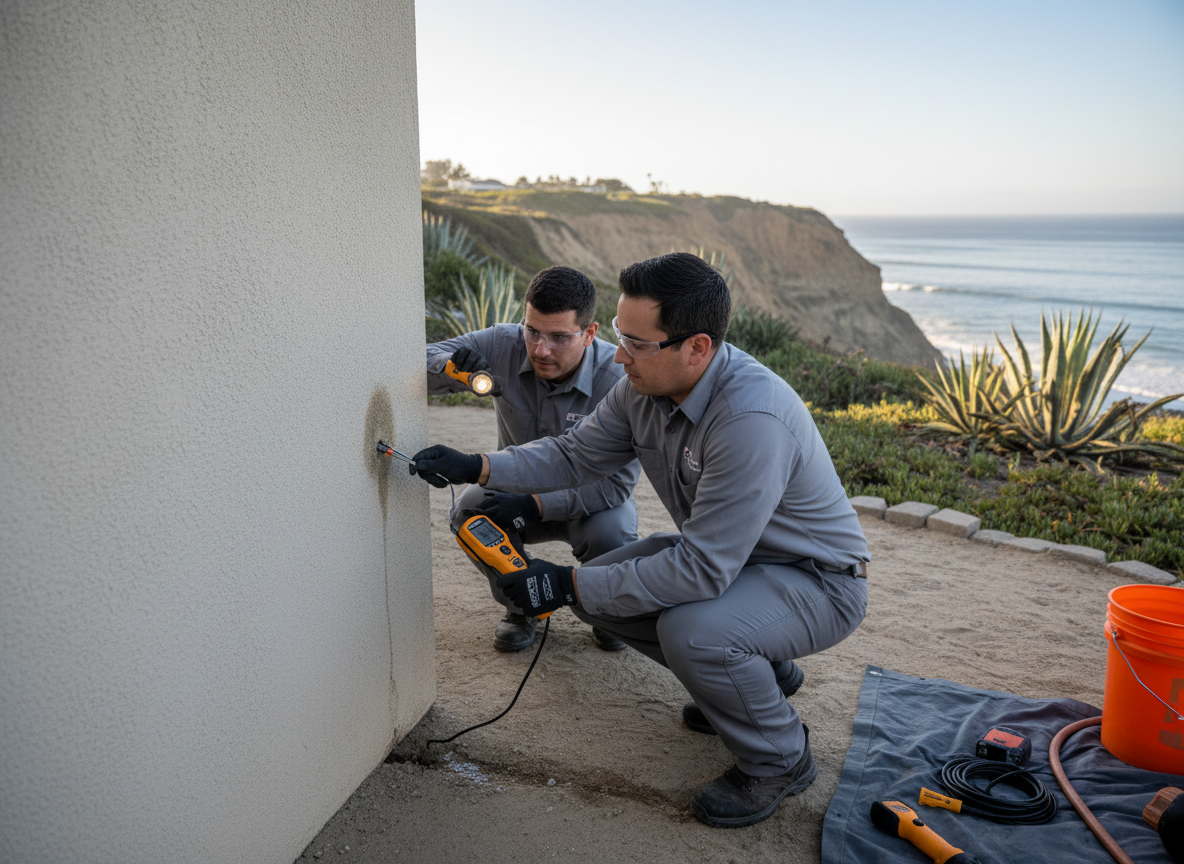
Checking for hidden leaks around Del Mar foundations begins with watching for musty odors, slight wall discoloration or floor buckling in crawl spaces of homes built decades ago in Del Mar Village and Del Mar Heights. These signs often appear first after winter rains soak the coastal soil near Del Mar Beach and Powerhouse Park. Early detection prevents water from migrating into framing and affecting nearby properties in North Beach.
Visual Signs in Local Housing Stock
Older homes throughout Del Mar Village and Del Mar Heights sit on raised foundations exposed to salt air and occasional heavy winter downpours. Look for hairline cracks wider than 1/8 inch along the stem walls or efflorescence on concrete near the grade line. In North Beach neighborhoods, check where irrigation lines meet the foundation because sandy soil shifts more than clay during the dry summer months. Pay attention to peeling paint or warped baseboards inside finished basements, especially on the north side of structures that receive less sun. These visual cues appear consistently in San Diego County coastal properties where mild year-round temperatures mask slow moisture movement until damage becomes visible.
Moisture Testing Methods for Coastal Homes
A basic moisture meter gives reliable readings on wood sill plates and drywall in crawl spaces common to Del Mar Heights homes. Test at multiple points along the foundation perimeter after any rain event, noting readings above 15 percent as a warning sign. Thermal imaging cameras reveal temperature differences where water has cooled the concrete near Del Mar Racetrack properties. Homeowners in North Beach can also use a garden hose to simulate runoff and observe where water pools against the foundation. These steps help distinguish between normal condensation from the Mediterranean climate and actual leaks from plumbing or grading issues.
Common Causes Tied to Del Mar Terrain
Sandy soils around Del Mar Beach and Powerhouse Park drain quickly but allow water to travel under foundations when downspouts discharge too close to the structure. Tree roots from mature landscaping in Del Mar Village often crack older sewer lines, sending wastewater toward footings. In Solana Beach and Encinitas border areas, older galvanized supply lines corrode faster due to coastal humidity. Seasonal wind-driven rain can push moisture through small gaps in stucco that covers many local foundations. Regular checks after storms reduce the chance of hidden damage spreading into adjacent living spaces.
When to Contact Local Specialists
If moisture readings stay elevated or visible cracks exceed 1/4 inch, schedule an assessment with a team familiar with San Diego County coastal construction. Water leak restoration crews understand how mild temperatures affect drying times in Del Mar crawl spaces. Review typical project ranges in the article What Water Damage Restoration Typically Costs in Del Mar before work begins. For properties near the lagoon, read Mold Risks Following Water Events Near Del Mar Lagoon to understand secondary issues. The 24/7 team at 1011 Camino Del Mar, Del Mar, CA 92014 can respond quickly when hidden leaks threaten structural elements.