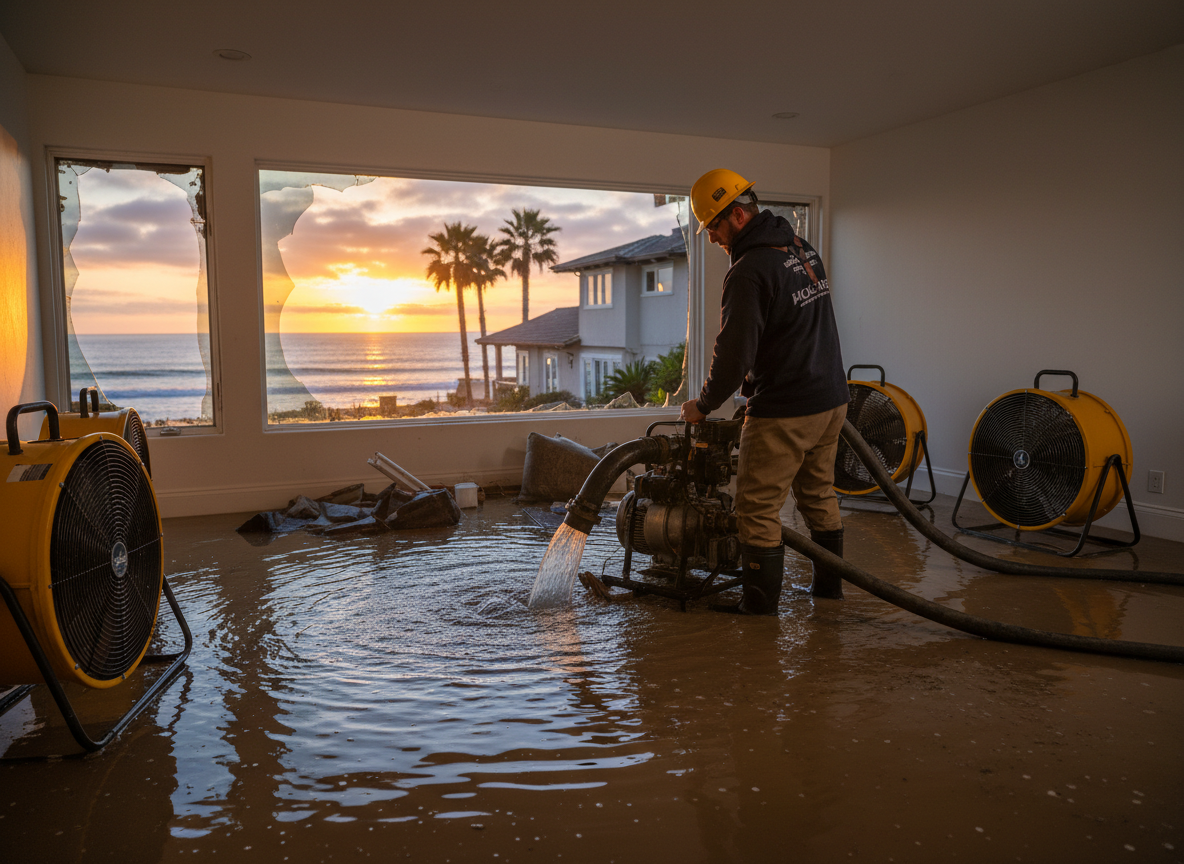
Del Mar homes built on coastal bluffs and in Del Mar Village often sit on older foundations with limited French drains, making them vulnerable when winter rains hit the mild Mediterranean climate. Salt air accelerates corrosion on metal components and HVAC systems once water enters, while North Beach properties face additional pressure from king tides pushing water back through storm drains. We extract standing water, then focus on hidden moisture in stucco walls and crawl spaces common to San Diego coastal construction before mold sets in the humid conditions.
Powerhouse Park and nearby low-lying streets in Del Mar Heights see repeated surface flooding when Encinitas and Solana Beach runoff overwhelms the shared watershed. Carpet padding and hardwood in these 1960s-1980s homes trap water against slab edges, requiring targeted removal rather than simple drying. We monitor moisture readings room by room because the clay-heavy soils here hold water longer, slowing evaporation even after visible water is gone.
Flood restoration here also means addressing electrical panels located in garages at grade level, a frequent detail in Del Mar Village homes. We isolate power, document affected circuits, and coordinate with licensed electricians before any drying equipment is placed. This step prevents secondary damage that shows up weeks later when outlets short after humidity lingers in wall cavities.
Because the area sees sudden downpours rather than prolonged storms, we stage equipment for rapid deployment from our Camino Del Mar location to reach properties before water migrates into neighboring units in attached townhomes common near the Racetrack.
Technician insight
In Del Mar, the thing that catches most people out with Flood restoration services is how quickly water moves under the raised foundations common in Del Mar Village once the clay soil saturates. Homeowners often stop at visible puddles and miss the moisture that travels along the bluff-side lots toward North Beach, leading to hidden rot in sill plates months later.
Heavy rain flooding near Powerhouse Park
Water entered a single-story home through the garage after an overnight downpour overwhelmed the street drain. We found saturated drywall extending two feet up in two bedrooms and standing water under the laundry room slab edge. Extraction and drying equipment were placed the same day, followed by targeted wall removal and daily monitoring until readings returned to normal.
How it works
- 1
Emergency Assessment
Arrive on site within hours, document water source and extent across affected rooms in Del Mar Heights or Village homes.
- 2
Water Extraction
Remove standing water and saturated materials while protecting nearby structures from cross-contamination.
- 3
Drying and Monitoring
Place air movers and dehumidifiers, then track moisture levels in walls, floors, and subfloors over multiple days.
- 4
Sanitization and Prevention
Apply antimicrobial treatments to surfaces and advise on drainage improvements to reduce future flood risk from coastal rains.
Pricing
Upfront quotes after inspection; cost driven by square footage affected, depth of water, and whether hardwood or electrical systems require extra handling.