2026-10-15 ·
Winter Rainwater Intrusion in Del Mar Homes
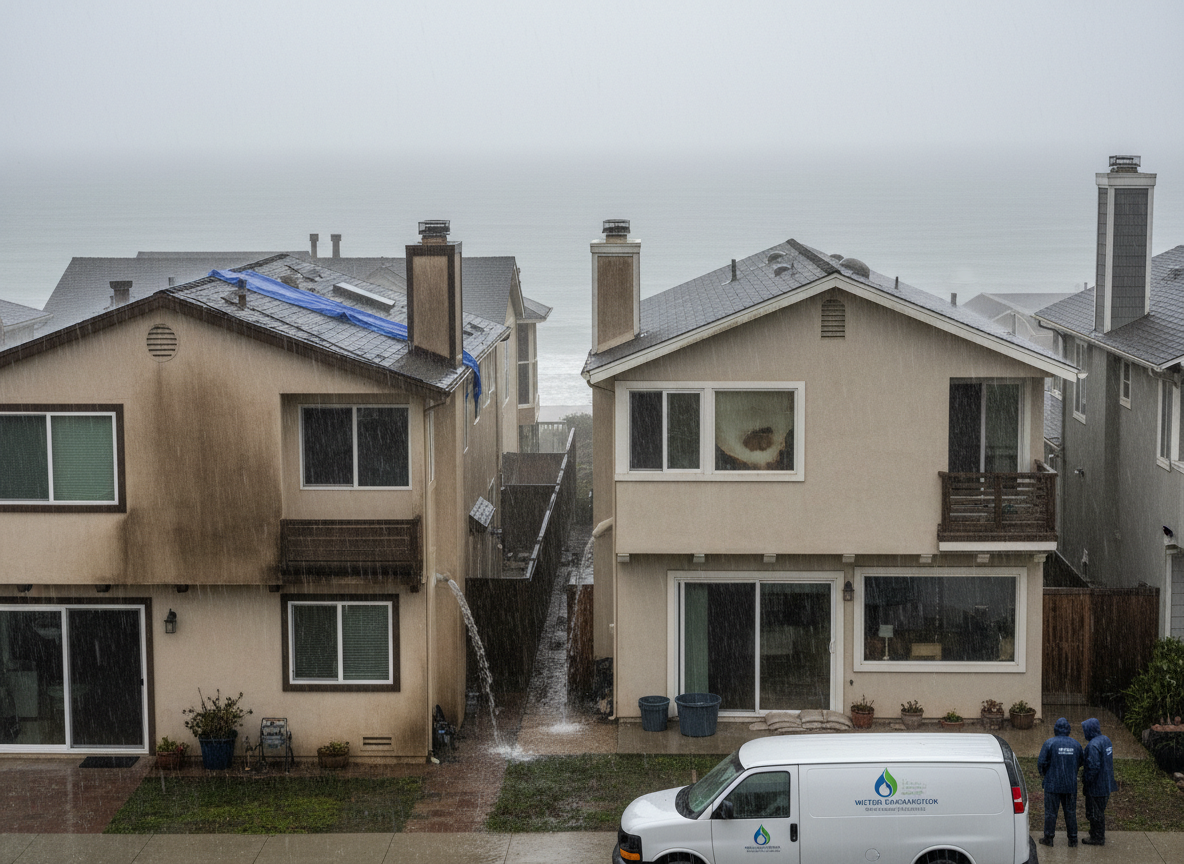
Winter rains in Del Mar typically produce 2 to 4 inches over a few days, enough to push water past aging roof flashings and window seals in homes built before 1980. The same storms that soak Powerhouse Park also saturate the soil around North Beach properties, driving moisture laterally into crawl spaces and lower walls.
Roof and Flashing Failures Common in Del Mar Village
Many single-story homes in Del Mar Village have flat or low-slope roofs with original bituminous membranes that reach the end of their service life after 15 to 20 years. When winter storms arrive, water ponds at the edge of the Del Mar Racetrack overlook and works under deteriorated flashing at chimneys and skylights. Once inside, it travels along ceiling joists and stains drywall several feet from the actual leak point. Homeowners notice the first signs as brown rings above living rooms after the second or third rain event of the season. Checking attic insulation for damp spots within 48 hours prevents hidden mold growth along the north-facing slopes that receive less sun.
Window and Door Leaks in Del Mar Heights Homes
Del Mar Heights sits on a bluff where wind-driven rain from the west strikes second-story windows at an angle. Original aluminum frames from the 1960s and 1970s lack modern weep holes and often have degraded glazing compound. Water enters at the sill, travels down the stud cavity, and pools at the base plate near electrical outlets. The mild coastal climate keeps temperatures above freezing, so the water does not expand and crack the stucco, making the intrusion harder to detect until interior drywall softens. Properties near the bluff edge also experience capillary action through cracked stucco that faces the prevailing onshore flow.
Soil Saturation and Foundation Intrusion Near North Beach
North Beach lots sit closer to the water table, especially after successive storms raise groundwater levels. Older concrete foundations without modern waterproofing allow moisture to wick upward through the slab edges. Homeowners report musty odors in closets and lower cabinets once the ground stays saturated for more than a week. The same conditions affect nearby Solana Beach and Encinitas properties where similar bluff-top construction meets the same soil types. Prompt exterior grading adjustments and French drain additions reduce the volume of water reaching the foundation during the wettest months.
Practical Response Steps After Intrusion Occurs
Begin by documenting every affected room with photos before any cleanup. Remove standing water with extraction equipment within the first 24 hours to limit swelling of hardwood floors. Direct air movers and dehumidifiers at wall cavities opened at the base plate; run them until moisture readings drop below 12 percent. In homes with finished basements, open the wall cavities on both sides of any shared plumbing wall to allow full drying. Residents in Del Mar Heights often need targeted drying behind kitchen cabinets where intrusion travels from roof valleys. After the structure reaches safe moisture levels, replace any insulation that contacted water and treat exposed framing with an antimicrobial solution. For readers wanting deeper cost context, see What Water Damage Restoration Typically Costs in Del Mar. Properties that experience repeated intrusion benefit from water damage mitigation focused on the roof-wall interface before the next storm season.
Long-Term Prevention in Coastal San Diego Homes
Re-seal or replace window flashings on the west and north elevations every 8 to 12 years. Add drip edges and step flashing at every roof-to-wall junction when re-roofing. Improve site drainage so finished grade slopes away from the foundation at least 6 inches over the first 10 feet. In crawl spaces, install a sealed vapor barrier and active ventilation to keep relative humidity below 55 percent year-round. These steps address the specific moisture loads created by Del Mar's winter rain pattern rather than generic inland solutions.