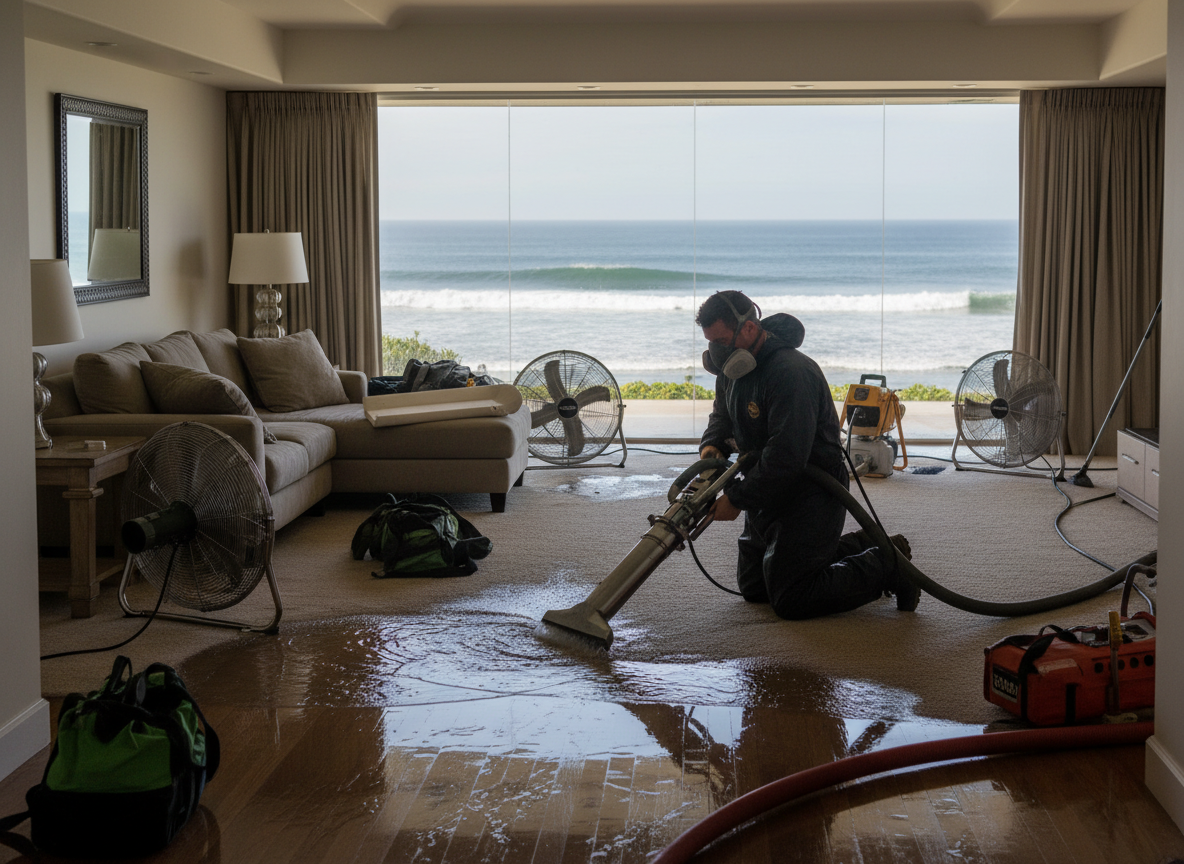
Coastal homes in Del Mar Village and Del Mar Heights often feature older wood framing and plaster that absorb moisture quickly from the mild Mediterranean climate. Salt air accelerates corrosion on metal components and HVAC systems, so mitigation crews focus on isolating wet zones before mold sets in. Powerhouse Park and North Beach properties sit on variable terrain where runoff can pool against foundations during rare heavy rains. Proper containment prevents cross-contamination into unaffected rooms while industrial air movers pull humidity from deep within walls and subfloors.
Technicians extract standing water first, then deploy moisture meters to locate hidden saturation in insulation and under tile common in Encinitas-adjacent builds. In San Diego County coastal zones, humidity lingers even after rain stops, requiring longer drying cycles than inland jobs. Edge cases include water that travels along stucco cracks into electrical chases near Del Mar Racetrack properties. Crews document every step for insurance while avoiding over-drying that can crack aged plaster.
Mitigation also addresses secondary risks like warped hardwood in beach-close homes where ocean moisture already stresses materials year-round. Technicians remove saturated baseboards and drill vent holes in strategic locations to promote airflow without visible damage. Local soil conditions near bluffs can retain water longer, extending the drying phase. This approach keeps secondary damage low in properties that see frequent minor leaks from coastal fog and occasional winter storms.
Technician insight
In Del Mar the thing that catches most people out with water damage mitigation is how salt air already weakens plaster and metal before any leak hits. Homes near Del Mar Beach or in Del Mar Heights often have hidden moisture travel along stucco that inland crews miss. Once winter rains start, the coastal humidity keeps materials wet longer than owners expect.
Hidden Leak in Del Mar Heights Home
A ceiling stain appeared after overnight rain in a Del Mar Heights property. Inspection revealed water traveling from a roof valley into wall cavities. Extraction and targeted drying prevented mold spread into the living areas while preserving original plaster finishes.
How it works
- 1
Initial Assessment
Technicians arrive 24/7 at the Del Mar address, identify water source, and map affected zones in neighborhoods like North Beach or Del Mar Heights.
- 2
Water Extraction
Standing water is removed using portable pumps suited for coastal access challenges before humidity spreads further into framing.
- 3
Containment and Drying
Plastic barriers isolate rooms while dehumidifiers and air movers run until meters confirm safe moisture levels in San Diego coastal builds.
- 4
Final Verification
Hidden areas are rechecked and surfaces sanitized to prevent mold in the mild year-round climate of Del Mar.
Pricing
Costs depend on water volume, affected square footage, and drying duration in older coastal homes; assessments provided on-site.