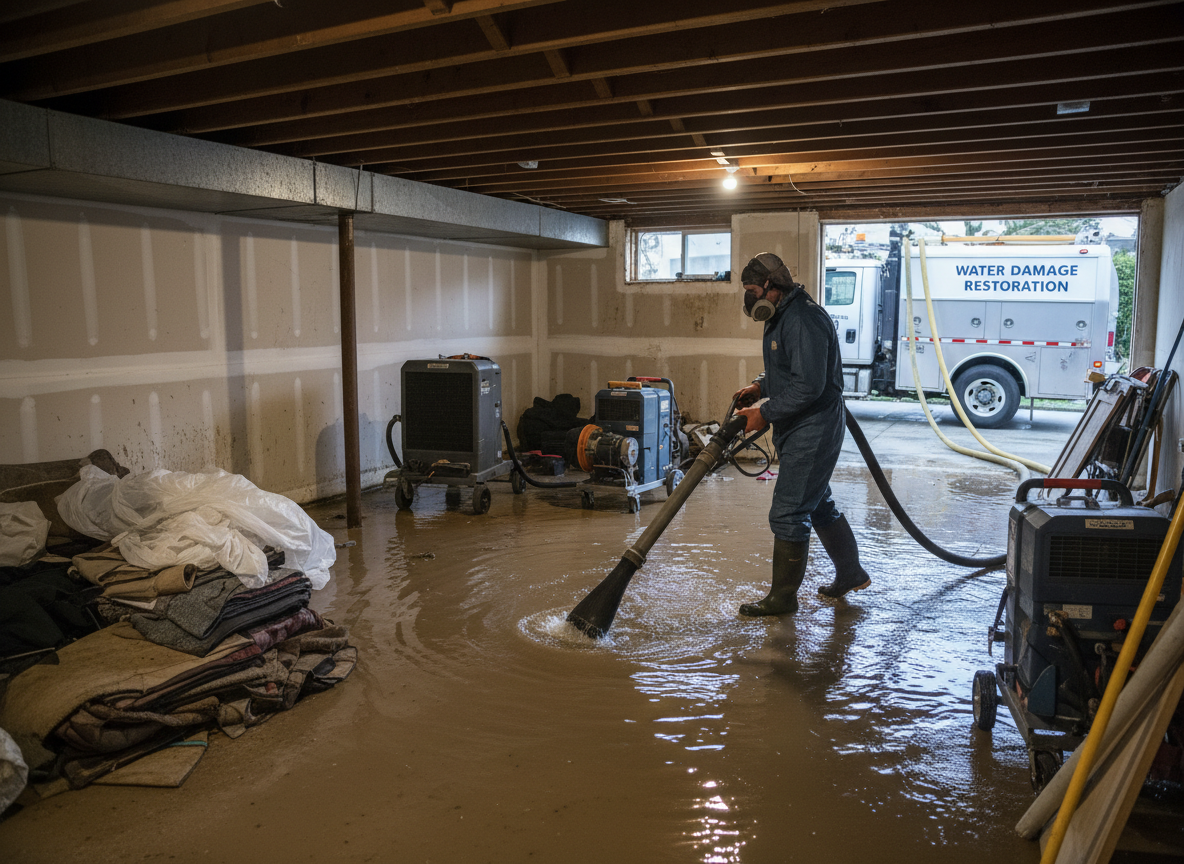
Del Mar’s mild Mediterranean climate still brings concentrated winter downpours that overwhelm older storm drains, especially along the bluffs above North Beach and in Del Mar Heights. Basements there often sit on sandy or clay-heavy soils that allow slow groundwater intrusion days after the rain stops. When water enters through cold joints or around window wells, it quickly saturates the slab and framing, creating hidden pockets behind drywall that must be opened and dried before mold sets in.
We begin every job with moisture mapping using pin and pinless meters plus thermal imaging to locate water that has wicked into plaster or under tile. In homes built before the 1980s common in Del Mar Village near Powerhouse Park, we frequently find uninsulated concrete walls that hold moisture for weeks; these require targeted drying with air movers and dehumidifiers sized to the square footage rather than whole-house equipment. We also check for sewage cross-contamination from nearby Encinitas or Solana Beach lines that back up during heavy rain.
After extraction we remove affected baseboard and at least twelve inches of drywall, then apply antimicrobial treatment only where porous materials cannot be fully dried. Final clearance includes post-drying moisture readings below 12 % on wood and concrete to satisfy San Diego County habitability standards before any reconstruction begins.
Technician insight
In Del Mar, the thing that catches most people out with Basement flood cleanup is the way sandy bluff soils in North Beach and Del Mar Heights let water travel laterally under the slab for days after the rain ends, so the visible puddle disappears but the moisture reading stays high until we open the wall.
Del Mar Heights hillside seepage
A homeowner in Del Mar Heights noticed water along one basement wall two days after a winter storm. We found groundwater had entered through a cold joint and wicked into the slab edge. Extraction, wall drying and targeted antimicrobial treatment dried the space in four days with no mold growth.
How it works
- 1
Arrival and Safety Assessment
We arrive within hours, shut off power to affected circuits, and evaluate structural risks before any water removal starts.
- 2
Water Extraction
Submersible pumps and wand extractors remove standing water from the slab and any French-drain systems.
- 3
Drying and Monitoring
Industrial air movers and dehumidifiers run while daily moisture readings track progress in walls and subfloor.
- 4
Sanitation and Clearance
Antimicrobial application followed by final meter readings and documentation for insurance or resale.
Pricing
Upfront written quotes after inspection; final cost depends on water volume, affected square footage and how many days drying requires.