Del Mar's mild Mediterranean climate keeps temperatures moderate but delivers persistent marine layer moisture that infiltrates attics in Del Mar Village and North Beach neighborhoods. Older wood-framed homes common throughout San Diego county often lack modern ridge venting, allowing salt-laden air to condense on sheathing and insulation. When leaks from aging composition shingles or wind-driven rain at Powerhouse Park properties go unnoticed, black mold colonies establish quickly on cellulose materials and can migrate into wall cavities toward living areas.
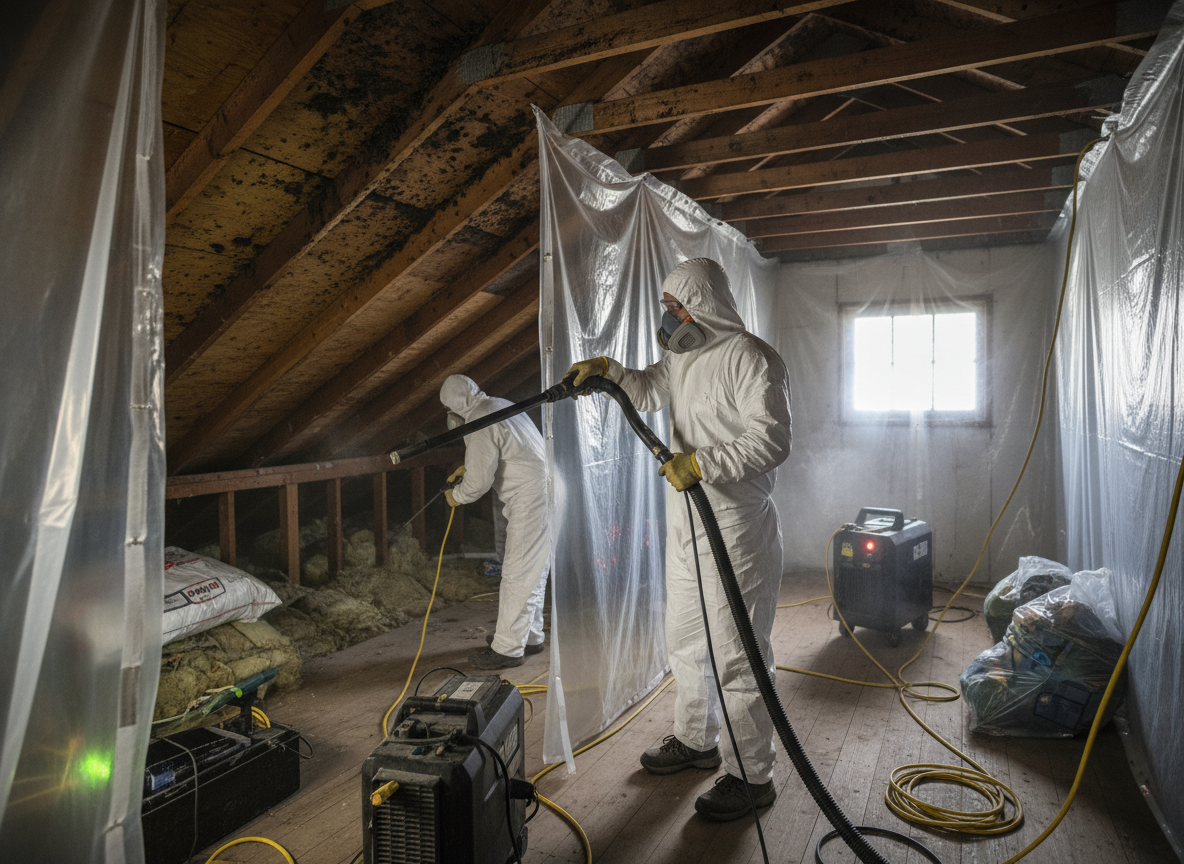
Remediation begins with containment using negative air machines to protect the rest of the house, followed by HEPA vacuuming and removal of affected insulation without disturbing asbestos-containing vermiculite found in some pre-1980 Del Mar Heights attics. Technicians then apply EPA-registered antimicrobials to rafters and install temporary dehumidification to drop relative humidity below 50 percent. Final clearance testing confirms spore counts match outdoor baselines before new insulation is blown in, ensuring the attic meets current San Diego county ventilation requirements.
Homeowners in Encinitas and Solana Beach frequently discover attic mold only after ceiling stains appear because coastal fog keeps exterior wood damp for weeks. Ignoring the issue allows spores to recirculate through HVAC returns located in many Del Mar attics. Proper remediation includes sealing all penetrations around plumbing vents and exhaust fans to prevent recurrence, especially critical in homes within a few blocks of Del Mar Racetrack where prevailing winds push additional moisture inland.
Technician insight
In Del Mar, the thing that catches most people out with attic mold remediation is salt air from Del Mar Beach accelerating corrosion on metal truss plates while mold grows unseen on the north-facing slopes of older roofs in Del Mar Heights.
Hidden Mold Above Del Mar Heights Kitchen
A homeowner noticed musty odors after winter marine layer fog persisted for weeks. Inspection revealed extensive mold on insulation and sheathing above the kitchen where a roof vent had been blocked by debris. Crews contained the attic, removed contaminated materials, treated rafters, and restored airflow with new ridge venting. Clearance tests passed and the odor disappeared.
How it works
- 1
Detailed Attic Inspection
Technicians access the attic from Del Mar properties to map moisture sources, identify mold extent on sheathing, and note any compromised insulation or wiring.
- 2
Containment and Air Filtration
Plastic barriers and negative air machines isolate the work zone so spores do not spread into living spaces below.
- 3
Removal and Antimicrobial Treatment
Affected materials are removed, surfaces are cleaned with HEPA equipment, and EPA-registered solutions are applied to rafters and joists.
- 4
Drying and Verification
Industrial dehumidifiers reduce humidity, then post-remediation air sampling confirms spore levels match outdoor readings before insulation replacement.
Pricing
Cost depends on attic size, mold extent, and accessibility; most Del Mar jobs require inspection before a firm quote.